
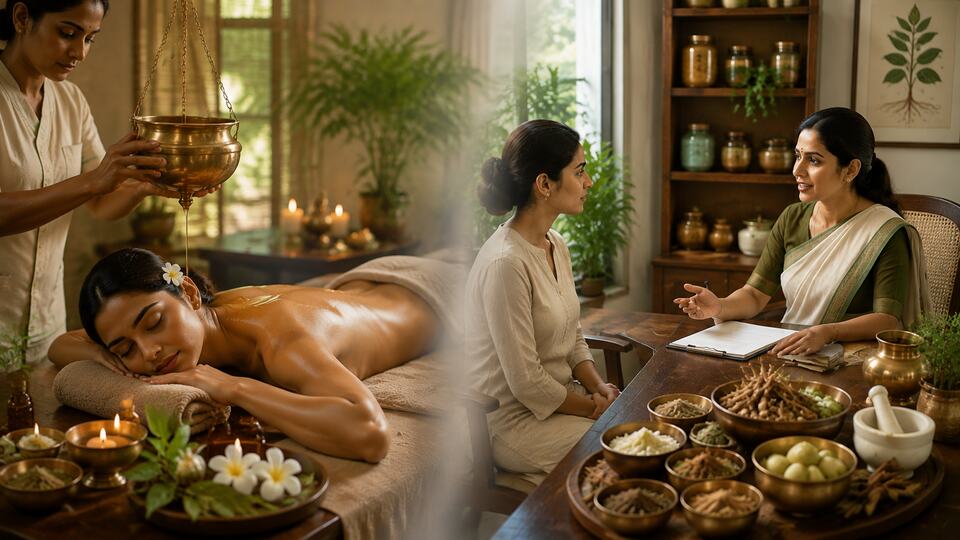
A relaxing oil massage at a wellness centre may be marketed as Panchakarma, but authentic Panchakarma treatment in classical Ayurveda is a much deeper therapeutic process. It begins with an Ayurvedic assessment of an individual’s Prakriti (constitution), Vikriti (current imbalance), Dosha involvement and Agni (digestive strength) before selecting suitable therapies.
Unlike a spa Panchakarma package that mainly focuses on relaxation and rejuvenation, medical Panchakarma follows classical Ayurvedic principles through Purvakarma, Pradhankarma and Paschatkarma under expert supervision. This blog explains Ayurvedic Panchakarma vs wellness spa to help you choose the right path based on your health goals.
What Panchakarma Actually Means in Classical Ayurveda
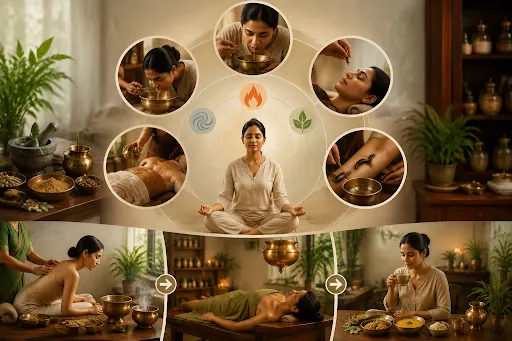
Panchakarma is a classical Ayurvedic purification and balancing approach designed to help remove accumulated imbalances from the body and restore harmony between the Doshas (Vata, Pitta, and Kapha).
The word Panchakarma means “five actions”, referring to five therapeutic procedures described in Ayurveda:
- Vamana (therapeutic emesis): Traditionally used as a cleansing procedure to address aggravated Kapha-related imbalances.
- Virechana (therapeutic purgation): A cleansing approach traditionally associated with balancing aggravated Pitta.
- Basti (medicated enema therapy): Considered an important therapy for Vata-related imbalances using herbal oils or decoctions.
- Nasya (nasal therapy): Administration of herbal preparations through the nasal route for supporting head and neck wellness.
- Raktamokshana (blood purification therapy): A classical procedure involving controlled removal of blood in selected conditions.
However, authentic Panchakarma treatment is not a fixed package where every person receives the same therapies. Ayurveda believes every individual has a unique Prakriti, and treatment selection depends on the Vikriti (current imbalance), Agni (digestive strength), age, health status and therapeutic goals.
Before the main procedures, Ayurveda traditionally recommends preparation therapies known as Purvakarma, followed by the Pradhankarma (main cleansing procedures) and Paschatkarma (post-therapy care) to support recovery.
What a Typical Spa “Panchakarma Package” Includes
Many wellness centres market relaxing Ayurvedic therapies as a Panchakarma package. These services may not always follow the complete classical Panchakarma process.
Oil Massages Marketed as Panchakarma
A common spa Panchakarma package may include therapies such as:
- Abhyanga (Ayurvedic oil massage)
- Steam therapy (Swedana)
- Relaxation therapies
- Herbal oil applications
These therapies are valuable parts of Ayurvedic wellness practices but don’t follow the complete Panchakarma protocol described in classical Ayurveda.
Why Spas Skip the Core Procedures
Classical Panchakarma procedures require detailed assessment, preparation and monitoring. Procedures like Vamana, Virechana and Basti are not selected randomly because they involve deeper therapeutic actions.
A medical Panchakarma approach considers:
- Individual Dosha imbalance
- Strength of Agni (digestion)
- Existing health conditions
- Suitability of cleansing procedures
- Required post-therapy care
Because of this personalised approach, many spa packages focus mainly on relaxation therapies rather than complete Ayurvedic Shodhana (cleansing) procedures.
What Medical Panchakarma at a Clinic Actually Involves
Medical Panchakarma is a structured Ayurvedic process that begins with understanding the individual, not starting therapies right away.
Doctor-Led Dosha Assessment
A qualified Ayurvedic practitioner evaluates:
- Prakriti — natural body constitution
- Vikriti — current imbalance
- Dosha involvement
- Agni - digestive strength
- Dinacharya - lifestyle patterns
- Ahara - dietary habits
This assessment helps determine whether Panchakarma is suitable and which therapies may be beneficial.
Ayurveda does not consider cleansing suitable for everyone at every stage. The therapy plan is personalised to the individual’s strength, condition, and therapeutic needs.
Purvakarma, Pradhankarma, Paschatkarma — The Three Phases
A complete Panchakarma process generally follows three stages:
1. Purvakarma (Preparation Phase)
Purvakarma prepares the body before the main procedures. It may include therapies like:
- Snehana (internal or external oleation)
- Swedana (herbal sweating therapy)
The purpose is traditionally to prepare the body for the main cleansing process.
2. Pradhankarma (Main Procedure Phase)
This involves the selected Panchakarma procedure based on the individual assessment. Not every person requires all five therapies.
The chosen procedure depends on factors like:
- Dosha involvement
- Health condition
- Body strength
- Treatment objective
3. Paschatkarma (Post-Therapy Care)
After Panchakarma, Ayurveda gives importance to recovery through:
- Gradual diet progression
- Rest and lifestyle guidance
- Supporting Agni
- Maintaining balance through Dinacharya
This phase helps the body transition back into a regular routine.
Panchakarma Detox Under Doctor Supervision
Panchakarma detox under doctor supervision is important because cleansing procedures require proper assessment and monitoring. Performing intensive therapies without understanding suitability may disturb Dosha balance instead of supporting wellbeing.
A trained Ayurvedic practitioner ensures procedures, diet, and recovery guidance align with the individual’s needs.
Spa Panchakarma vs Medical Panchakarma — Key Differences
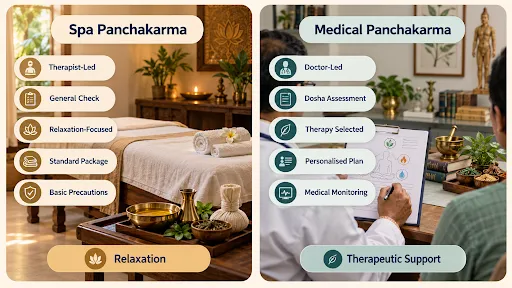
Although both approaches use the term Panchakarma, their purpose, planning, and level of supervision can differ significantly. A wellness spa may focus on relaxation, while medical Panchakarma follows classical Ayurvedic principles with individual assessment and therapeutic planning.
| Factor | Spa Panchakarma Package | Medical Panchakarma |
| Supervision | Wellness therapist-led | Ayurvedic doctor-led |
| Assessment | General wellness evaluation | Prakriti, Vikriti and Dosha assessment |
| Therapies used | Mainly massage and relaxation therapies | Selected Panchakarma procedures based on need |
| Customisation | Limited personalisation | Individualised treatment plan |
| Safety protocols | Basic wellness precautions | Medical assessment and monitoring |
| Practitioner credentials | Wellness professionals | Qualified Ayurvedic practitioners |
| Expected outcome | Relaxation and rejuvenation | Therapeutic balance and health support |
Your choice depends on your goal. If relaxation is the priority, a wellness therapy may be suitable. For specific health concerns, a personalised Panchakarma approach is generally more appropriate.
Can Spa Panchakarma Be Harmful?
Panchakarma involves powerful cleansing procedures that require proper understanding of the body’s condition. While Ayurvedic therapies can be beneficial when chosen appropriately, improper application may cause complications.
Panchakarma Side Effects If Done Wrong
Panchakarma side effects if done wrong may occur when procedures are performed without proper assessment, at an unsuitable time, or with incorrect preparation.
Potential concerns may include:
- Weakness due to inappropriate cleansing
- Digestive disturbance
- Dehydration or imbalance after improper purgation
- Aggravation of existing Dosha imbalance
- Poor recovery due to lack of Paschatkarma guidance
Procedures like Virechana and Basti are not suitable for everyone at all times. Ayurveda considers factors like age, Bala (strength), Agni, Prakriti and current health condition before recommending such therapies.
This is why Panchakarma should be approached as a structured Ayurvedic process rather than a ready-made detox package.
Which One Actually Works — And For What?
The answer depends on what you expect from Panchakarma. A spa approach and medical Panchakarma serve different purposes.
Spa Panchakarma: Relaxation and Rejuvenation
A wellness-based Panchakarma experience may support:
- Relaxation and stress relief
- Temporary physical comfort
- Rejuvenation experience
- Self-care and wellness goals
These therapies can be a part of Ayurvedic lifestyle practices but may not involve complete classical Panchakarma procedures.
Medical Panchakarma: Therapeutic Ayurvedic Approach
The medical Panchakarma benefits come from a personalised approach where therapies are selected after understanding the individual’s constitution and imbalance.
A clinically guided Panchakarma programme may focus on:
- Supporting Dosha balance
- Improving Agni (digestive strength)
- Managing accumulated Ama according to Ayurvedic principles
- Supporting lifestyle correction
- Creating a personalised recovery plan
A qualified Ayurvedic practitioner should always evaluate conditions requiring therapeutic attention before starting Panchakarma.
How to Choose a Genuine Panchakarma Clinic
Choosing the right centre is important because Panchakarma is not a one-size-fits-all therapy. If you are wondering how to choose a Panchakarma clinic, consider the following:
Checklist Before Starting Panchakarma
Look for:
- A BAMS (Bachelor of Ayurvedic Medicine and Surgery) doctor available for consultation
- Proper Dosha assessment before therapy selection
- Individualised treatment planning
- Clear explanation of Purvakarma, Pradhankarma and Paschatkarma
- Guidance on Ahara (diet) and lifestyle after therapy
- Proper hygiene and therapy protocols
A genuine Panchakarma treatment centre focuses on understanding the person first, rather than offering the same package to everyone.
At Ayusya Ayurveda, Panchakarma programmes are planned based on an individual Ayurvedic assessment, health requirements, and therapeutic goals.
Don’t Confuse Relaxation With Real Healing
A relaxing oil massage and a classical Panchakarma programme may share some Ayurvedic elements, but they are not the same. Real Panchakarma begins with understanding the individual through Prakriti, Dosha assessment, Agni and overall health condition.
For those seeking Panchakarma therapy in Kolkata, we offer personalised Panchakarma programmes based on classical Ayurvedic principles, guided assessment and structured care.
Consult us to understand which approach suits your needs and begin your wellness journey with the right guidance.
Here’s What People Also Ask About Panchakarma Treatment
- Is a spa Panchakarma package the same as medical Panchakarma?
No. A spa Panchakarma package usually focuses on relaxation therapies, while medical Panchakarma involves personalised assessment and classical Ayurvedic procedures under expert supervision.
- What is authentic Panchakarma treatment?
Authentic Panchakarma treatment follows classical Ayurvedic principles, including assessment, preparation (Purvakarma), main procedures (Pradhankarma) and post-care (Paschatkarma).
- Is spa Panchakarma effective?
Spa therapies may support relaxation and rejuvenation. However, they may not provide the same therapeutic approach as doctor-supervised Panchakarma.
- Why is doctor supervision important for Panchakarma detox?
Doctor supervision helps ensure procedures suit Prakriti, Dosha balance, Agni, and individual health needs.
- What are the medical Panchakarma benefits?
Medical Panchakarma benefits may include personalised Ayurvedic support for balance, digestion, lifestyle correction and overall wellbeing when appropriately selected.
- Can Panchakarma have side effects?
Yes, inappropriate procedures or lack of proper assessment may lead to discomfort or imbalance. Proper guidance reduces these risks.
- How do I choose a Panchakarma clinic?
Look for qualified Ayurvedic doctors, personalised assessment, structured therapy plans and proper post-treatment guidance.
- Does everyone need all five Panchakarma procedures?
No. Ayurveda selects procedures based on individual constitution, current imbalance and therapeutic requirement.
- How long does Panchakarma treatment take?
The duration varies depending on the therapy plan, individual needs and the procedures selected.
- Is Panchakarma only for detox?
No. In Ayurveda, Panchakarma is a structured approach that focuses on restoring balance, supporting wellness and addressing individual health needs.