
Key Takeaways
- Cervical spondylosis affects both neck joints and discs, sometimes causing pain, stiffness or nerve symptoms.
- Ayurvedic care may support comfort and movement, but it has not been proven to reverse degeneration.
- New weakness, balance difficulties or bladder and bowel changes require urgent medical attention.
Turning your head to cross the road should not feel difficult. When neck pain and stiffness keep returning, you may wonder whether the problem lies in your muscles, joints or spine.
Yes, cervical spondylosis involves joint degeneration, but it also affects the neck’s discs. We offer care for joint disorders guided by Ayurvedic principles and individual needs. But people often doubt the effectiveness of the Ayurvedic approach. So, in this blog we will inform you how ayurveda can help manage this medical condition!
What is Cervical Spondylosis?
Cervical spondylosis describes age-related changes in the discs, bones and joints of the cervical spine, the neck region. Often called cervical osteoarthritis, it can develop without causing pain. A scan showing degeneration does not automatically explain every neck symptom.
Common Symptoms: Neck Pain, Stiffness, Tingling and Headaches
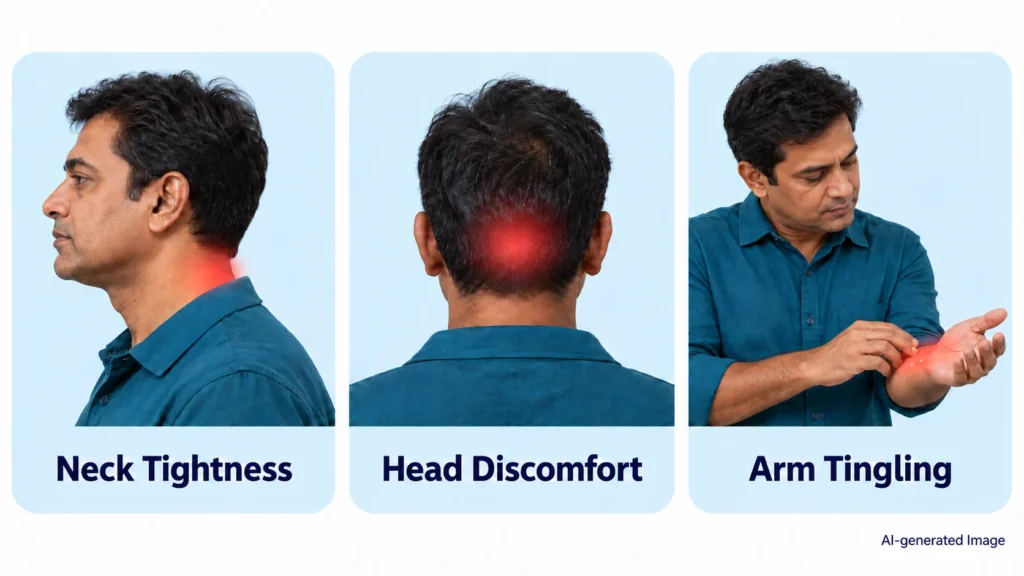
Symptoms may include:
- An aching neck or shoulders and restricted movement.
- Headaches starting near the back of the neck.
- Pain travelling into an arm, sometimes with tingling or numbness.
Arm symptoms may suggest nerve irritation and deserve assessment, especially when persistent.
Who is Most at Risk?
Age is the main risk factor. Previous neck injuries and repetitive physical strain can also contribute. Desk work and prolonged downward phone use may aggravate discomfort, although posture alone does not prove spinal degeneration.
Is Cervical Spondylosis a Joint Disorder?
Yes. It belongs within joint disorders because the neck’s facet joints can develop osteoarthritis. However, the term also includes disc degeneration, making it broader than a problem affecting one joint.
How Facet Joints and Discs Wear Down?
Discs cushion the spaces between vertebrae. As they lose water and height, pressure on nearby facet joints can increase. Their cartilage may deteriorate, while bone spurs can narrow spaces around nerves. This explains why some people develop arm symptoms alongside neck discomfort.
How It Differs from Other Joint Disorders?
The cause and location help distinguish these conditions:
| Condition | Main Difference |
| Cervical spondylosis | Degenerative changes in neck joints and discs |
| Knee osteoarthritis | Degenerative joint disease affecting the knee |
| Rheumatoid arthritis | Autoimmune inflammation that can affect several joints |
Rheumatoid arthritis requires specific medical treatment to control disease activity. The same treatment plan will not suit all three conditions.
How Ayurveda Understands Cervical Spondylosis?
In Ayurveda, this pattern is often discussed as Greeva Sandhigata Vata. Greeva means neck, Sandhi means joint, and Vata is the dosha associated with movement. We consider this traditional understanding alongside the medical diagnosis.
Vata Imbalance and Weak Asthi Dhatu
Ayurveda associates degeneration with Vata Prakopa, or aggravated Vata, and Dhatu Kshaya, meaning tissue depletion. Asthi Dhatu refers to bone tissue. Ayurvedic care aims to pacify Vata and support tissue nourishment. These traditional concepts guide care but do not measure bone density or nerve damage.
Why Pain and Stiffness Occur Together?
Ayurveda describes pain as Shoola and stiffness as Stambha. Traditionally, these symptoms guide the choice of Vata-pacifying care. Medically, irritated joints and muscle tightening can make movement uncomfortable. We consider both perspectives when discussing symptom relief and daily function.
Ayurvedic Treatment for Cervical Spondylosis: What is Involved?
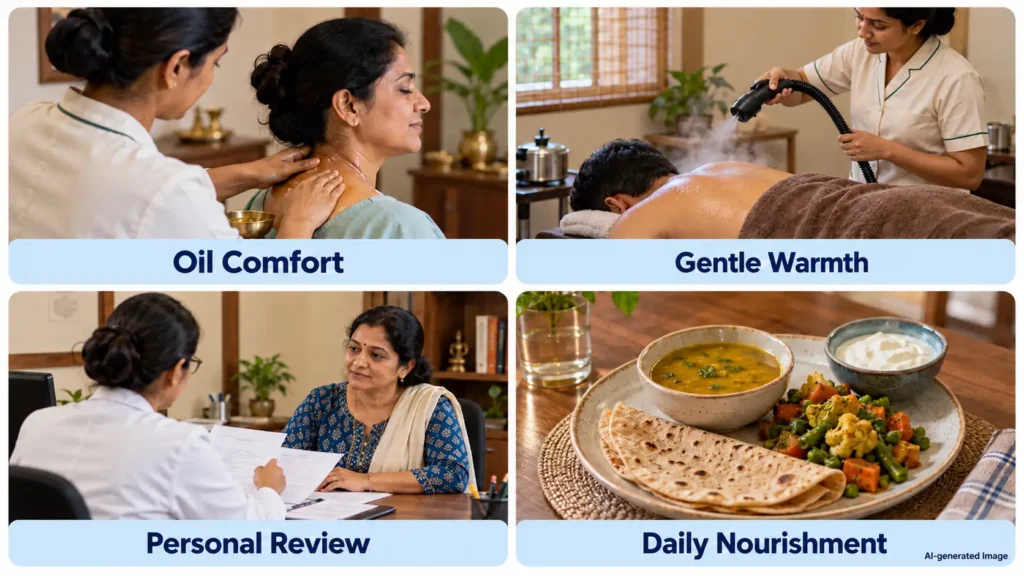
Our approach to Ayurvedic therapy for joint disorders may combine Snehana (oil-based therapy), Swedana (therapeutic warmth), prescribed medicines and Ahara-Vihara (diet and lifestyle guidance). The aim is better comfort and movement. Evidence for cervical-specific Ayurvedic treatments remains limited, so they should complement appropriate medical care.
Abhyanga and Swedana
We offer these therapies as part of our care for cervical and lumbar concerns, depending on individual suitability:
- Abhyanga: A form of external Snehana, this therapy uses gentle medicated oil massage to support comfort and relaxation.
- Swedana: Controlled warmth or herbal steam is traditionally used to help ease Stambha, or stiffness.
Panchakarma Therapy for Neck Pain
We consider Panchakarma for neck pain after assessing your symptoms, overall health and suitability. Our cervical and lumbar treatment services include Nasya (nasal administration of prescribed preparations) and Basti (medicated enema therapy), selected according to the doctor’s assessment.
These procedures require professional supervision and should complement appropriate medical care; they are not proven to reverse cervical degeneration.
Herbal Medicines and Dietary Guidance
Prescribed herbal medicines may form part of our personalised treatment approach. If you are seeking natural treatment for cervical spondylosis, we recommend sharing all current medicines and supplements during consultation so we can consider possible interactions.
Ahara, or diet, is another aspect of Ayurvedic care. As general supportive guidance, regular, balanced meals should meet your nutritional needs and suit any existing health conditions. Dietary changes can support overall health, but cannot rebuild worn discs.
Daily Habits and Posture Care
Vihara, or lifestyle guidance, considers how everyday habits affect comfort and movement. Alongside treatment, these general measures may help:
- Keep screens near eye level and change position regularly.
- Follow neck and shoulder exercises recommended by a qualified clinician.
- Practise gentle yoga only if it suits your condition.
- Avoid forceful neck movements and poses that place weight on the neck.
Stop an activity if it triggers spreading arm pain, numbness or dizziness. A qualified physiotherapist can assess which exercises are appropriate for you.
Why Choose Ayurvedic Treatment for Joint Disorders at Our Clinic?
We provide consultations, customised therapies and follow-up support. Ayurvedic treatment across our clinics in Kolkata considers your Prakriti, symptoms, and daily routine, and we review your treatment as your needs change.
What Does a First Consultation at Ayusya Ayurveda Look Like?
Thinking of a consultation with an Ayurvedic doctor in Kolkata for the first time? It begins with a discussion of your concerns, lifestyle, and body constitution, or Prakriti. Bring any existing reports and a list of medicines you take. Describe when the pain started and whether it affects sleep, work or arm movement; these details help guide assessment.
Personalised Plans, Not One-Size-Fits-All
Someone with occasional stiffness may need a different approach from someone with persistent symptoms. We tailor therapies and review progress through follow-up. Suspected nerve or spinal cord problems need medical assessment before proceeding with neck therapies.
When to See a Doctor Urgently?
Seek urgent medical assessment for new or worsening arm weakness, reduced grip, or repeatedly dropping objects. Go to an emergency department for:
- New balance problems or difficulty walking.
- Sudden loss of coordination.
- New bladder or bowel control changes.
These can indicate serious nerve or spinal cord involvement. Do not wait for a scheduled therapy session.
Take the First Step Towards Healing Joint Disorders!
If neck discomfort keeps interrupting your day, start with an assessment. Visit any of our clinics in Kolkata to discuss Ayurvedic treatment for joint disorders. We can explain the available options and help you understand whether Ayurvedic care suits your needs.
Frequently Asked Questions
Can cervical spondylosis be completely reversed?
No. Existing degeneration is usually not reversible, but symptoms and daily function can improve with appropriate care.
How long does Ayurvedic treatment for neck pain take to show results?
There is no reliable fixed timeline. Response varies; review progress with the treating doctor.
Is a cervical collar or special pillow recommended alongside treatment?
Use a collar only if prescribed. Choose a supportive pillow that keeps the neck comfortably aligned.
Can Ayurvedic treatment accompany painkillers or physiotherapy?
Sometimes. Both practitioners should review the plan and check for medicine interactions.
Which foods should be avoided or included?
Choose balanced meals with protein, vegetables and calcium sources. Avoid unnecessary exclusions; no specific diet reverses spondylosis.