
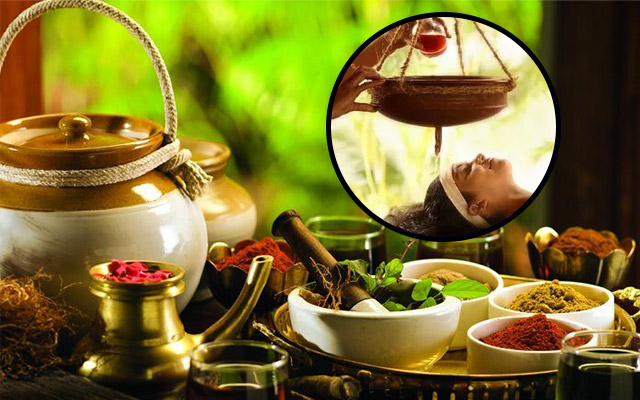
Feeling constantly heavy, bloated, fatigued, or dealing with recurring sinus, skin, or digestive issues? These are not random problems—they are signs of internal imbalance.
In Ayurveda, choosing between Vamana, Virechana, Basti, and Nasya depends on which dosha is disturbed, where toxins are accumulated, and how well your body can tolerate cleansing. That’s the foundation of correct healing.
If you are considering panchakarma therapy, understand this first: the therapy is not chosen by symptoms alone—it is chosen by pattern.
Most people choose therapy based on what they feel. Ayurveda chooses based on what’s actually happening inside.
This is where trusting Ayusya Ayurveda for the right panchakarma treatment in Kolkata becomes critical—because the wrong therapy doesn’t just delay results, it can worsen imbalance.
Quick summary: which therapy is usually chosen for what
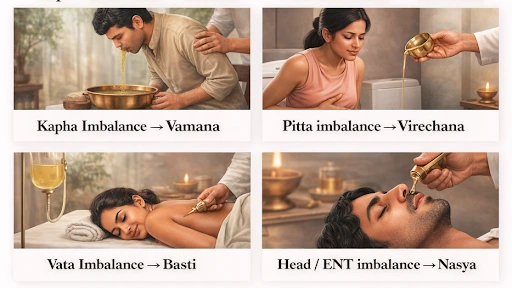
Each therapy targets a specific system and imbalance.
- Kapha imbalance → Vamana
- Pitta imbalance → Virechana
- Vata imbalance → Basti
- Head/ENT imbalance → Nasya
This is how structured panchakarma treatment works—precise, not generic.
One-line cheat sheet (Kapha → Vamana, Pitta → Virechana, Vata → Basti, Head/ENT → Nasya)
- Heaviness, congestion → Vamana
- Heat, acidity, skin flare-ups → Virechana
- Dryness, joint pain, constipation → Basti
- Sinus, headache, brain fog → Nasya
What is Panchakarma, and where these therapies fit in
This isn’t a quick detox trend—it’s a medically structured cleansing protocol.
Panchakarma works in phases, preparing the body, clearing accumulated toxins (Ama), then rebuilding digestion and balance so results actually stick.
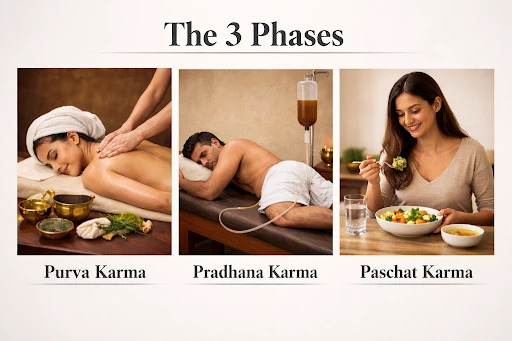
The 3 phases: Purva Karma, Pradhana Karma, Paschat Karma
- Purva Karma (Preparation): Oleation + sweating to loosen toxins
- Pradhana Karma (Main therapy): Targeted cleansing (Vamana, Virechana, Basti, etc.)
- Paschat Karma (Recovery): Diet reset + gradual restoration of digestion
Why “detox” in Ayurveda is protocol-based (not DIY)
Ayurveda does not believe in random detox. A trained panchakarma doctor ensures:
- Correct therapy selection
- Proper preparation
- Safe execution
Without this, detox becomes stress—not healing.
How doctors decide: dosha imbalance + symptoms + strength of the patient
Treatment is never one-size-fits-all.
Assessment factors: agni (digestion), ama (toxins), prakriti/vikriti, season, age
Doctors assess:
- Digestive strength (Agni)
- Toxin accumulation (Ama)
- Body constitution
- Current imbalance
- Seasonal influence
Wrong therapy at the wrong time = poor results.
Who should avoid or postpone Panchakarma (red flags & contraindications)
Panchakarma isn’t a “push through it” therapy. If the body is already under stress, timing matters—delay first, treat later.
Avoid or postpone if:
- Pregnancy
- Acute infection or fever
- Severe weakness
- Uncontrolled chronic conditions
Safety is part of treatment—not optional.
Vamana Therapy (Therapeutic Emesis): when it’s chosen
Not a routine cleanse—this is a targeted therapy, selected only when the pattern fits.
Best suited patterns (Kapha excess: heaviness, congestion, allergies, asthma-like issues)
Vamana therapy is ideal when Kapha accumulates in the upper body.
Signs include:
- Chest congestion, heaviness, sluggish digestion
- Recurrent respiratory issues (cough, sinus congestion, allergies)
- Chronic skin conditions with a Kapha link
- Excess mucus or fluid retention
- Strong digestion and adequate strength to tolerate the procedure
Step-by-step: preparation → main procedure → aftercare
- Internal oiling
- Induced therapeutic emesis
- Supervised recovery
Expected benefits & common side effects
Benefits of Vamana therapy -
- Clears respiratory channels
- Improves breathing
- Reduces heaviness
Temporary effects:
- Mild fatigue
- Throat discomfort
Who should not do Vamana
- Weak individuals
- Elderly with low strength
- Severe gastric sensitivity
Virechana Therapy (Purgation): when it’s chosen
Virechana therapy is used when heat and toxins need a downward exit. Virechana targets excess Pitta, clears the gut, and helps settle inflammation-driven conditions through controlled, therapeutic purgation.
Best suited patterns (Pitta excess: acidity, skin flare-ups, “heat” signs)
Virechana therapy works for excess heat in the body.
Symptoms:
- Acid reflux
- Skin disorders
- Burning sensation
- Irritability
Procedure: snehana/swedana → purgation day → samsarjana krama (diet reset)
A structured cleanse, not a random flush—each step prepares, clears, then rebuilds.
Procedure:
- Oleation + sweating
- Controlled purgation
- Gradual diet recovery
Expected benefits & common side effects
Done right, Virechana clears heat without draining you—precision over force.
Benefits:
- Reduces acidity and burning
- Improves skin clarity
- Balances internal heat (Pitta)
- Supports smoother digestion
Common, short-term effects:
- Controlled loose motions
- Mild weakness or fatigue
- Thirst or slight dehydration
- Light abdominal cramps
- Temporary appetite dip
If symptoms feel excessive or prolonged, it’s a sign the protocol needs adjustment—not something to ignore.
Who should not do Virechana
This isn’t for a depleted system—timing and strength matter.
Avoid in:
- Pregnancy
- Existing dehydration
- Poor digestive strength (low Agni)
Basti Therapy (Medicated Enema): when it’s chosen
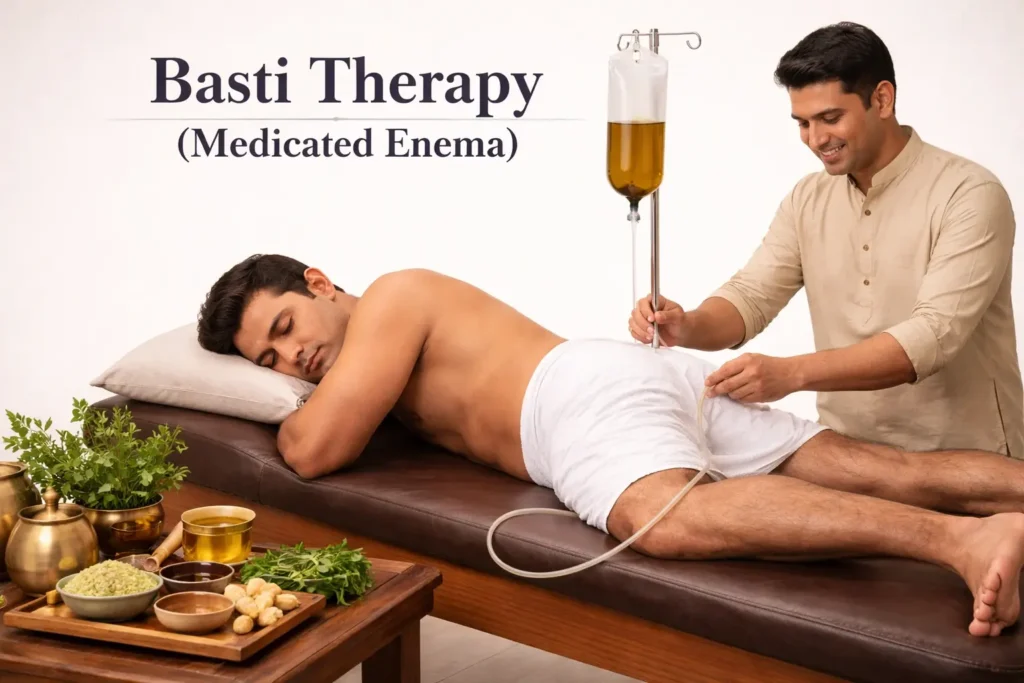
The go-to therapy when Vata is out of rhythm—dry, stiff, irregular. Basti works deeper than symptom control. Chosen when imbalance runs deep, Basti targets Vata at its root—restoring movement, lubrication, and rhythm where the body feels dry, stiff, or irregular.
Why Basti is considered central for Vata patterns (dryness, constipation, joint issues)
Basti therapy is the most effective treatment for Vata imbalance.
Indications:
- Chronic constipation
- Joint pain
- Dryness
- Nervous system imbalance
Types: Niruha/Aasthapana vs Anuvasana (what the difference means)
- Niruha → cleansing
- Anuvasana → nourishing
Procedure + course length patterns
- Given in cycles
- Multiple sessions
- Customised duration
Expected benefits & common side effects
Benefits:
- Improves bowel movement
- Reduces stiffness
- Supports mobility
Who should not do Basti
Avoid in:
- Acute diarrhea
- Active infections
Nasya Therapy (Nasal Therapy): when it’s chosen
Used when the head feels heavy, blocked, or foggy, Nasya clears the nasal pathways, reduces congestion, and supports clarity by targeting imbalances above the neck.
Best suited patterns (head/neck: sinus congestion, headaches, migraine-like issues)
Nasya therapy targets the head region.
Indications:
- Sinus congestion
- Headaches
- Migraine-like issues
Procedure: pre-care → administration → post-care
- Facial massage
- Herbal oil drops
- Rest phase
Expected benefits & common side effects
nasya benefits for sinusitis migraine:
- Clears sinus
- Improves clarity
- Reduces headaches
Also known as nasyam treatment, widely used for ENT disorders.
Who should not do Nasya
Avoid in:
- Acute infection
- Immediately after meals
Vamana vs Virechana vs Basti vs Nasya: comparison table (for quick diagnosis of intent)
Goal, dosha focus, typical indications, session/course length, downtime
| Therapy | Dosha | Focus Area | Duration |
| Vamana | Kapha | Upper body | Short |
| Virechana | Pitta | Digestive system | Moderate |
| Basti | Vata | Colon/nerves | Multi-day |
| Nasya | Head | ENT/brain | Short |
What it feels like (patient experience section—rarely explained clearly)
- Vamana → intense release, immediate lightness
- Virechana → controlled cleansing, gradual relief
- Basti → slow, steady improvement
- Nasya → light, clear-headed feeling
Why treatment differs
Different route, different job. But same goal ensuring precise outcomes.
Upper GI/respiratory clearing (Vamana) vs lower GI/pitta clearing (Virechana)
- Vamana works upward—clearing mucus and congestion from the upper GI and respiratory tract
- Virechana works downward—eliminating excess heat and Pitta through the lower gut
Colon/vata modulation (Basti) vs head/ENT channel clearing (Nasya)
- Basti regulates Vata through colon
- Nasya clears head channels
Preparation and aftercare that decide results
Results aren’t decided on the main procedure day—they’re built before and sealed after..
Diet rules, sleep, stress, and “samsarjana krama” basics
Recovery determines success.
- Light, gradual diet
- Proper rest
- Low stress
What to avoid
- Gym-intensity workouts
- Alcohol
- Late nights
- Spicy food binges
Choosing a Panchakarma clinic in Kolkata: what to ask before you book
Don’t just book a clinic—interview it. The right questions upfront decide whether you get real results or not.
Doctor supervision, therapist training, hygiene, customization vs “menu-based Panchakarma”
Don’t fall for glossy “detox packages.” Real Panchakarma is doctor-led, diagnosis-driven, and tightly supervised.
Choose wisely:
- Doctor-led treatment (not therapist-only)
- Personalised plan, not menu-based packages
- Trained therapists with proper protocols
- Strict hygiene and safety standards
- Avoid “one-size detox” without diagnosis
Program duration options and what changes the cost
Panchakarma cost depends on:
- Therapy type
- Duration
- Customisation
Finding providers locally (directories vs verified clinics)
Directories can show you options, but not all options are equal. Listings are a starting point—verification is what protects you.
Choose smarter:
- Prefer verified, doctor-led clinics
- Check credentials and real patient feedback
- Confirm diagnosis-based treatment, not generic listings
- Avoid choosing purely on ratings or price
People Also Ask
Which Panchakarma therapy is best for weight loss?
There’s no one-size answer—Vamana or Virechana is chosen based on your imbalance, not your goal alone.
Which therapy helps sinusitis or migraine?
Nasya is typically preferred, as it directly targets congestion and imbalances in the head region.
How many days does Panchakarma take?
It can range from a few days to a few weeks, depending on the therapy and your body’s condition.
Is Panchakarma safe for everyone?
Safe when properly assessed and supervised—not advisable as a DIY or package-based treatment.
What is the diet after Virechana/Vamana?
A structured, gradual recovery diet (samsarjana krama) that rebuilds digestion step by step.
Final Takeaway: don’t choose by trend—choose by pattern + supervision
At Ayusya Ayurveda, every therapy is selected based on your body’s imbalance, digestive strength, and long-term health goals—not trends. If you’re considering panchakarma treatment in Kolkata, the right guidance ensures not just relief—but real correction.
Delay the right treatment, and imbalance deepens. Choose correctly, and your body resets the way it was meant to.