

If you’re reading this, you’re probably done with band‑aid fixes and empty promises. You’ve tried surgery, antibiotics, wound care… yet that fistula stubbornly refuses to close. You’re left frustrated, in pain, and wondering why you’re not better yet.
Well — let’s break it down clearly. By the end, you’ll understand what conventional treatments often miss, the real reasons your fistula isn’t healing, and how a different path like ayurvedic treatment in Kolkata for fistula at Ayusya Ayurveda could make a world of difference.
First — What Is a Fistula and Why Is Healing Hard?
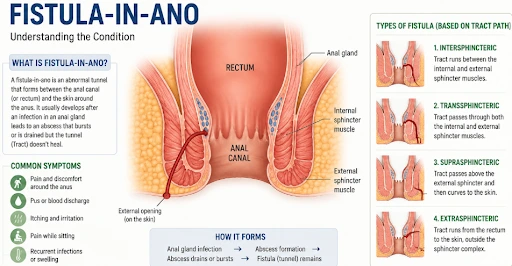
A fistula (most commonly an anal fistula) is an abnormal tunnel connecting the inside of the anal canal to the skin around the anus. It usually occurs after an abscess that didn’t fully heal — essentially a wound that never closed properly.
The tricky thing is this:
- It looks simple on the outside
- But underneath, it can be long, branching, branched, or wrapped around sensitive muscles
- And it can have hidden extensions that make healing a nightmare for conventional surgery to fully eradicate.
In fact, even best‑case conventional surgery often doesn’t guarantee success — recurrence rates after surgery can be anywhere from 10% up to 50% or more, especially in complex cases.
The Real Reasons Fistulas Fail to Heal ( backed by science )
Let’s cut through the noise. Healing doesn’t just depend on closing a hole. There’s a whole ecosystem of factors that determine whether that tract finally seals or just keeps draining.
Here’s a breakdown:
| Reason Your Fistula Isn’t Healing | What It Actually Means | Evidence / Notes |
| Incomplete removal or closing of the tract | If any fistula branch is left behind, it keeps draining like an open wound. | Intraoperative errors/ missed secondary tracts increase recurrence. |
| Missed internal opening | Surgeons sometimes fail to identify where the fistula starts inside the anal canal. | Failing to find the internal opening is linked to dramatically higher failure rates. |
| Poor blood supply & chronic inflammation | Without good circulation, healing isn’t just slow — it’s blocked. | Fistulas in inflammatory conditions (like Crohn’s) heal poorly. |
| Patient‑related factors (diabetes, smoking, obesity) | These impair immunity and slow healing at a tissue level. | Diabetes and smoking are documented risk factors. |
| Inadequate post‑op wound care & hygiene | A clean wound heals — a contaminated one doesn’t. | Poor postoperative care leads to persistent drainage and infection. |
So the core reasons aren’t just “the surgery didn’t work.” It’s much deeper — sometimes literally.
So Why Do Many Conventional Treatments Still Fail?
Even in big hospitals and specialist centers, conventional treatments can fail because they treat the surface problem and ignore the underlying biology and healing environment.
Let’s break that down:
1. One‑Size‑Fits‑All Surgical Mindset
Surgeons often lean heavily on procedures like fistulotomy, seton placement, LIFT or plugs, but these techniques alone don’t change the biological terrain of chronic inflammation or poor healing. The evidence shows that recurrence after these procedures isn’t rare — it’s expected in some cases.
2. Focus on Anatomy Not Physiology
A surgeon can remove a tract, but if the tissue around it is inflamed or poorly vascularised, that scar tissue doesn’t heal like healthy tissue does. That’s why some fistulas just keep coming back.
3. Postoperative Management Is Often Slipshod
Conventional care sometimes stops after surgery — not because doctors don’t care, but because waiting rooms are full and follow‑ups get rushed. But wound care matters A LOT — and poor postoperative care is a documented cause of persistent fistulas.
So what if instead of just cutting, we help the body heal more naturally? That’s where time‑tested holistic approaches like Ayurveda come in.
Where Ayurveda Fits In — And Why It Can Work Better

Ayurveda doesn’t just depend on cutting or sealing the fistula tunnel — it changes the healing environment of the body.
Here’s why that matters:
★ Improving Tissue Healing from Inside Out
Ayurvedic protocols focus on:
- Reducing inflammation
- Balancing digestion & immunity
- Supporting micro‑circulation (blood flow to tissues)
- Detoxifying and aiding natural tissue repair
This holistic groundwork isn’t typically part of conventional aftercare — but it makes a real difference.
Kshar Sutra Technique — Ancient yet Effective
One of the oldest Ayurvedic procedures for fistula is the Kshar Sutra therapy — a medicated thread technique that gradually eradicates the fistula tract while promoting natural drainage and healing. Many Ayurvedic practitioners report excellent success rates with it, especially in recurrent or complex cases where surgery has already failed.
Now, experiences vary, and patient selection matters — but the principle is clear: it’s not just about “cutting and stitching.” It’s about activating the body’s own healing powers.
So if your fistula hasn’t healed despite surgery, don’t blame yourself or label your body as “broken.” It simply means the internal healing terrain wasn’t fully addressed.
How Ayusya Ayurveda in Kolkata Approaches Fistula Differently
Unlike conventional clinics where you basically get surgery and a few medications, an ayurvedic treatment in Kolkata for fistula at places like Ayusya Ayurveda offers:
✔ A personalised assessment of your healing ecosystem, not just your symptoms
✔ Gut‑healing, metabolism‑balancing therapies that support immune response
✔ Herbal regimens that tackle chronic inflammation
✔ Manual therapies, detox protocols, and internal medicines that promote blood flow
✔ Kshar Sutra or related procedures performed by trained Ayurvedic specialists
Multiple smaller clinical reports and decades of practice suggest balanced healing is more sustainable than surgery alone — especially in stubborn or recurring cases.
Conventional Vs. Holistic Healing Models
| Aspect | Conventional Treatment | Ayurvedic / Holistic Approach |
| Primary Focus | Remove the fistula tract | Promote whole‑body healing |
| Healing Mechanism | Surgery + wound closure | Tissue regeneration + inflammation control |
| Post‑op Care | Wound hygiene instructions | Internal therapies + detox + diet |
| Recurrence Risk | Medium–High | Lower (patient dependent) |
| Systemic Support | Limited | Strong emphasis |
| Cost (Long‑term) | Can rise with recurrences | Often stable |
Important Takeaways You Should Know
✅ A fistula won’t always heal just by cutting it out. That’s a fact backed by clinical data.
✅ Recurrence is not a personal failure — it’s a sign the healing environment needs help.
✅ A truly successful approach must address both the anatomy and the biology.
✅ Ayurveda offers a time‑tested, natural complement — and in many stubborn cases, a better one.
Yes, results can vary — but when conventional treatment alone fails, you deserve a smarter, broader plan.
Your Fistula Can Heal
Look, let’s be honest: treating fistulas is one of the trickiest things in medicine. Conventional surgery fixes the shape — but not always the root cause. That’s why so many people come back with non‑healing wounds, drainage, and persistent discomfort.
The secret isn’t just doing more surgeries. The secret is unlocking the body’s healing potential.
If you’ve been through the conventional loop, it’s time to explore a more holistic, science‑backed approach — like the ayurvedic treatment in Kolkata for fistula offered at Ayusya Ayurveda.
Not because surgery is “bad,” but because real healing shouldn’t stop at the operating table — it should begin there.
People Also Ask
- Why does my anal fistula keep coming back after surgery?
Fistulas can recur if the internal opening or secondary tracts are missed during surgery. Poor blood supply, chronic inflammation, or underlying conditions like diabetes also hinder healing. - What are the hidden reasons a fistula does not heal?
Factors like persistent infection, poor tissue regeneration, and immune system imbalance can prevent healing. Lifestyle habits such as smoking, irregular bowel movements, and stress also contribute. - How does Ayurvedic treatment help in fistula healing?
Ayurvedic treatment addresses the root cause by reducing inflammation, improving circulation, and supporting tissue repair. Herbal medicines and therapies create an optimal environment for natural healing. - Is Kshar Sutra therapy effective for recurrent fistulas?
Yes, Kshar Sutra uses a medicated thread to gradually remove the fistula while promoting drainage and tissue healing. It is especially effective in cases where conventional surgery has failed. - Can lifestyle and diet affect fistula recovery?
Absolutely. A balanced diet, proper hydration, and avoiding irritants like spicy foods can reduce inflammation and support faster healing. Regular exercise and good hygiene also play key roles. - How long does it take for a fistula to heal naturally?
Healing varies based on the type and complexity of the fistula, generally ranging from a few weeks to several months. Chronic or recurrent fistulas may require longer, structured treatment plans. - What complications can occur if a fistula is left untreated?
Untreated fistulas can lead to chronic infections, abscess formation, and severe discomfort. In rare cases, persistent inflammation may cause tissue damage or affect nearby organs. - Why do conventional treatments fail for complex fistulas?
Conventional surgery often focuses only on the tract, neglecting tissue health, inflammation, and immune support. Missed secondary tracts and improper post-operative care also contribute to failure. - Are there non-surgical alternatives to fistula treatment?
Yes, therapies like Kshar Sutra, herbal medicines, and other Ayurvedic interventions offer non-surgical options. These focus on healing from within while reducing recurrence risk. - How can I prevent my fistula from recurring after treatment?
Maintaining hygiene, following a fibre-rich diet, managing underlying conditions, and adhering to post-treatment protocols help prevent recurrence. Regular check-ups and early intervention are also crucial.