

Many people assume Ayurveda takes too long to show results because it does not always work like a quick-relief approach. However, this belief often comes from comparing two different treatment philosophies. Ayurveda focuses on understanding the individual, identifying imbalances and supporting the body’s natural healing process rather than only managing symptoms.
We approach health concerns by considering Prakriti (body constitution), Vikriti (current imbalance), Dosha balance, Agni (digestive strength) and lifestyle factors. The timeline for improvement depends on the condition, its severity, and how consistently you follow the treatment plan.
For those exploring Ayurvedic treatments, understanding the process behind Ayurvedic care can help set the right expectations. So, this blog explains:
- Why Ayurveda may take different timelines for different conditions
- How Ayurvedic treatment compares with quick symptom-relief approaches
- What factors influence the response time of Ayurvedic therapies
Where the “Ayurveda Is Slow” Belief Comes From

The idea that Ayurveda is always slow is a common myth about Ayurveda. This perception often develops because Ayurveda usually focuses on correcting contributing factors rather than providing only immediate symptom control.
For example, if digestion, lifestyle habits, or Dosha imbalance contribute to a health concern, Ayurveda considers these factors when planning treatment. This approach may require time because the body’s balance is restored gradually.
Comparing Ayurveda’s Approach to Fast Symptom Relief
Many modern treatments are designed to provide quick relief from specific symptoms. This can help, especially when immediate management is needed.
Ayurveda follows a different approach. It focuses on understanding:
- Why the imbalance developed
- How the body is responding
- Which lifestyle and dietary factors may be affecting recovery
This difference does not mean one approach is always faster or slower. It means treatment goals can differ. A quick reduction in symptoms and long-term support for balance don't always follow the same timeline.
Why Some Conditions Genuinely Take Longer to Heal
The question why Ayurveda takes time to show results depends largely on the nature of the health concern. Conditions that develop over months or years often take longer because the body may need support to correct deeper imbalances.
Ayurveda considers factors like Dosha imbalance, Agni, Ama (metabolic waste according to Ayurveda), lifestyle patterns and individual constitution while creating a treatment plan.
A personalised approach means the timeline may differ from person to person, even for the same condition.
Root Cause Treatment vs Quick Fix
The difference between root cause treatment vs quick fix lies in what the treatment is trying to achieve.
A quick-fix approach may focus mainly on reducing a symptom at that moment. Ayurveda traditionally focuses on understanding the factors behind the imbalance and supporting overall harmony.
For example, if digestive imbalance, poor routine or unsuitable food habits are affecting health, Ayurveda may include:
- Dietary correction (Ahara)
- Daily routine changes (Dinacharya)
- Herbal support
- Suitable Ayurvedic therapies
The aim is not simply to wait for symptoms to disappear but to improve the factors that influence health.
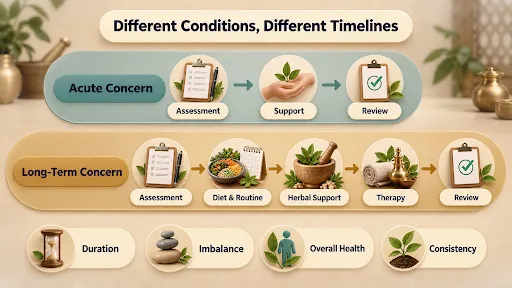
Chronic vs Acute Conditions — Different Timelines
The Ayurvedic treatment timeline for chronic disease is usually different from short-term health concerns.
Acute concerns may show improvement sooner because they have a shorter history and fewer contributing factors. Chronic conditions may require longer support because they are often linked with long-standing lifestyle patterns, metabolism or internal imbalance.
Factors that influence the timeline include:
- Duration of the condition
- Severity of imbalance
- Age and overall health
- Diet and lifestyle consistency
- Response to treatment
Does Ayurveda Actually Work Faster in Some Cases?
Yes, does Ayurveda work faster for some conditions is a question with a variable answer. Some people notice improvement sooner when the concern is linked with correctable lifestyle factors or when the body responds well to the recommended approach.
The response depends on the individual, not on Ayurveda being universally fast or slow.
Conditions Where Results Show Up Sooner Than Expected
Some people may notice early improvements in areas related to:
- Digestion and bowel habits
- Sleep quality
- Energy levels
- Stress-related concerns
- Lifestyle-related imbalances
These improvements may happen when treatment is combined with proper diet, routine correction and consistency.
However, the time required varies because Ayurveda considers each person’s unique constitution and health pattern.
The Role of Panchakarma in Accelerating Recovery
Panchakarma treatment duration depends on the individual’s condition, preparation requirements and selected therapies.
Panchakarma is not a standard detox package where everyone follows the same process. Ayurveda considers whether the therapy is suitable after assessing factors like Prakriti, Dosha involvement, Agni and overall strength.
When recommended appropriately, Panchakarma may become part of a structured Ayurvedic plan aimed at restoring balance and supporting recovery.
Ayurveda vs Allopathy — Comparing Treatment Speed Fairly
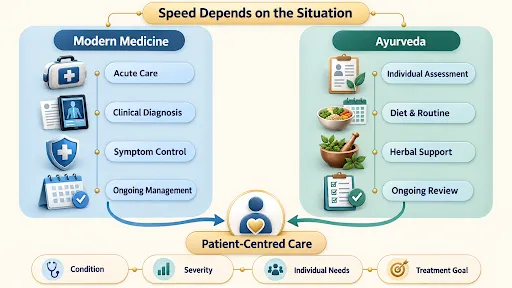
Discussions about Ayurveda vs allopathy treatment speed often arise because the two systems may have different treatment goals. Modern medicine often focuses on managing symptoms quickly, especially in acute situations, while Ayurveda generally focuses on improving balance by addressing contributing factors.
Neither approach follows the same timeline for every condition. The response depends on the health concern, severity, individual factors and treatment objective.
Fast Relief vs Lasting Resolution
Fast relief matters when symptoms need immediate attention. For example, certain acute conditions may need quick medical intervention.
Ayurveda approaches health from a broader perspective by considering:
- Prakriti (individual constitution)
- Dosha balance
- Agni (digestive strength)
- Diet and lifestyle patterns
- Long-term habits affecting health
The focus is often on building a sustainable foundation rather than temporarily reducing symptoms.
That is why comparing only speed may not give the full picture. The more important question is whether the treatment approach matches the individual’s health needs and goals.
What Actually Determines How Long Ayurvedic Treatment Takes
The question of how long Ayurvedic treatment takes has no single fixed answer. Ayurveda does not follow a single timeline because every individual has a different body constitution, health history and response pattern.
Some people may notice changes early, while others may require a longer period of consistent care.
Factors Like Severity, Consistency and Lifestyle Compliance
The realistic expectations from Ayurvedic treatment depend on several factors, including:
- Duration of the condition: Long-standing concerns may take longer than recent issues.
- Severity of imbalance: Deeper imbalances may need a longer approach.
- Treatment consistency: Following prescribed medicines, therapies and routines influences progress.
- Diet and lifestyle: Food habits (Ahara) and daily routine (Dinacharya) play an important role in supporting treatment.
At Ayusya Ayurveda, we don't follow a fixed timeline for everyone. We assess individual health patterns and create a personalised plan based on specific needs.
Judging Ayurveda on the Right Timeline
Calling Ayurveda “slow” without understanding its approach is one of the common myths about Ayurveda. The timeline depends on what is being treated, how long the concern has existed and how well the body responds to the treatment plan.
The Ayurvedic medicine effectiveness depends on proper assessment, suitable treatment selection and consistency from the individual’s side.
For those looking for Ayurvedic treatments in Kolkata, connect with us. We follow an individualised approach based on Prakriti, Dosha balance, Agni and lifestyle factors to guide people towards better health.
What People Also Ask
How soon can you expect to feel better after starting Ayurvedic treatment?
The timeline varies depending on the condition, severity, individual health factors and consistency with the recommended treatment plan. Some concerns may show improvement earlier, while chronic conditions may require longer support.
Is Ayurveda slower than allopathy for all conditions, or only some?
Ayurveda and allopathy follow different treatment approaches. The timeline depends on the condition, treatment goal and individual response rather than one system always being faster.
Does Panchakarma speed up recovery compared to medicines alone?
Panchakarma treatment duration and its role depend on individual assessment. It may be included in a personalised Ayurvedic plan when appropriate.
Why do some Ayurvedic treatments take months to show full results?
Some health concerns develop gradually because of long-term lifestyle patterns, metabolism, or internal imbalance. Ayurveda focuses on supporting these underlying factors, which may require consistent care over time.
Can lifestyle and diet compliance affect how fast Ayurvedic treatment works?
Yes. Following recommended Ahara (diet) and Dinacharya (daily routine) can support the treatment process and may influence how the body responds.